
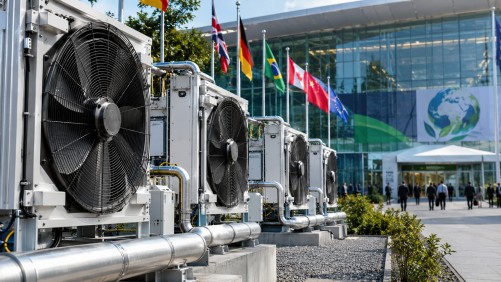
At the COP31 climate summit in Antalya, Turkey, discussions have intensified around carbon dioxide removal (CDR) technology. Proponents of CDR are urging its inclusion in the summit’s final agreement. The technology focuses on extracting carbon dioxide from the atmosphere to store it underground, in oceans, or within other materials, aiming to mitigate rising global temperatures.
Advocates believe CDR could be vital in reducing temperatures after exceeding the 1.5°C warming threshold set by international agreements. They are calling for increased investment and the formation of a global framework to coordinate CDR initiatives. Currently, about 2 billion tonnes of carbon dioxide are removed annually, primarily through reforestation, with direct air-capture technologies contributing a minor share.
However, the technology faces challenges due to its nascent stage, including limited funding, high costs, and scalability issues. Environmental groups caution that reliance on future carbon removal technologies could undermine current efforts to immediately cut emissions. They also raise concerns about potential impacts on land use and marine ecosystems, and the possibility of continued fossil fuel consumption.
CDR is distinct from carbon capture and storage (CCS), which captures emissions directly from industrial sources before atmospheric entry. Despite ongoing debates, both technologies are part of a draft text under discussion at the climate summit.