
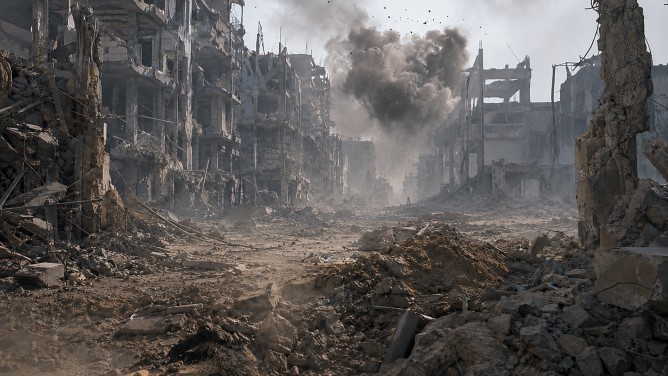
The rift between Hezbollah and the Lebanese government is widening as Israeli military actions persist in southern Lebanon, leaving local communities caught between two differing sources of security and aid. For years, Hezbollah has cultivated a comprehensive network of social services that includes housing, healthcare, education, and financial support, which have become crucial for families displaced by ongoing conflicts. In contrast, Lebanon’s financially challenged government continues to grapple with providing similar levels of support.
In an effort to assert state authority and regain public trust, particularly in regions previously under Hezbollah’s influence, the Lebanese government is taking steps to improve its presence. The army has been tasked with spearheading reconstruction and infrastructure projects in territories reclaimed from Israeli control, with the goal of boosting the visibility of government institutions within these communities. However, the state’s efforts are hampered by ongoing Israeli military activities in southern Lebanon, which have eroded public confidence in the government’s capability to safeguard its citizens.
Residents’ opinions on the situation are divided, with some criticizing the government for its perceived inadequacy in response efforts, while others hold Hezbollah partly responsible for the recurrent cycles of conflict. Lebanese officials acknowledge that rebuilding trust among Hezbollah supporters requires more than just security initiatives. They emphasize that the government must enhance public services, political inclusion, and economic opportunities to encourage communities to rely more on state institutions.
The complex situation also poses challenges for efforts aimed at disarming Hezbollah. Lebanese authorities are under pressure to assert control over weapons while avoiding the impression of aligning with Israel against southern Lebanon communities. The restoration of state authority, officials caution, will remain a formidable task unless Israeli military operations and occupation in the region cease. Until then, many residents continue to perceive Hezbollah as a more dependable provider of protection and assistance compared to Lebanon’s financially strapped government.