
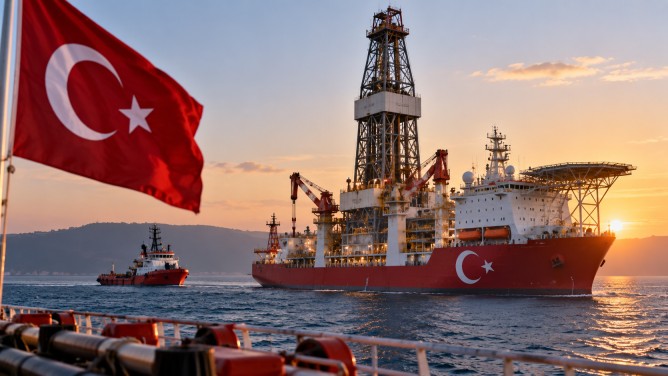
Türkiye is set to commence drilling for oil in the western Black Sea, marking a significant step in its ongoing endeavors to boost domestic oil and natural gas reserves. This upcoming drilling operation, described by Energy Minister Alparslan Bayraktar as technically challenging, is expected to be a lengthy process. By 2026, Türkiye aims to have conducted six exploration wells across various parts of the Black Sea, including the western, central, and eastern regions.
In recent years, Türkiye has significantly bolstered its offshore exploration capabilities, now possessing a fleet of six deep-water drilling vessels. Several of these vessels are currently engaged in exploration and developmental activities in the Black Sea. The country’s commitment to expanding its energy resources is further underscored by its plans to increase production from its Black Sea gas fields by the end of this year.
Türkiye’s Black Sea gas reserves have seen considerable growth, now estimated at approximately 785 billion cubic meters following a series of discoveries starting in 2020. Presently, the nation produces around 9.5 million cubic meters of gas daily, sufficient to meet the needs of about 4 million households. The government anticipates that by 2028, production could climb to between 16 and 17 billion cubic meters annually.
Central to Türkiye’s strategy is reducing its reliance on imported energy by enhancing domestic production. As part of this strategy, the nation is expanding its LNG infrastructure and pipeline connections. Furthermore, Türkiye is exploring new gas transportation routes to bolster its role as a regional energy transit hub, with potential pathways from the Middle East to European markets being considered.