
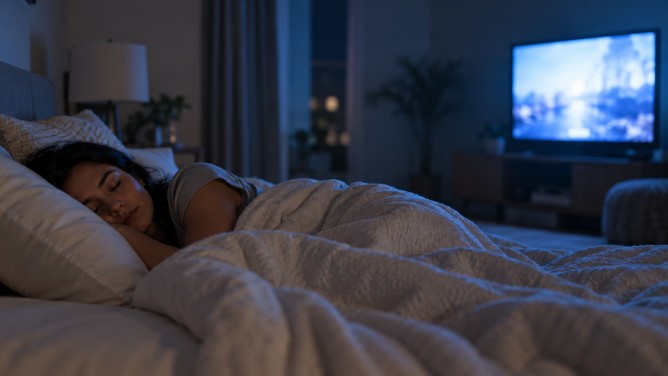
Falling asleep with the television on might seem harmless, but recent research suggests that exposure to artificial light at night could impact heart health. A study conducted on over 11,000 adults revealed that those subjected to higher levels of nighttime light had measurable differences in heart structure and function, emphasizing the importance of a dark sleeping environment.
The study, which involved participants wearing wrist devices to measure light exposure, found that increased exposure at night was associated with greater left ventricular mass, thicker heart walls, and reduced heart muscle contraction ability. These changes are consistent with concentric cardiac remodeling, a structural change that could have clinical implications, though the study does not establish a direct causative link between nighttime light and heart disease.
Researchers noted that various artificial light sources, not just televisions, contribute to nighttime exposure. This includes bedroom lamps and outdoor streetlights, which may disrupt the body’s circadian rhythm—an internal clock that regulates sleep and hormone release. Light exposure at night can interfere with this rhythm, potentially leading to sleep disruption and affecting heart health.
The study also found that shorter sleep duration partially accounted for the association between nighttime light exposure and heart changes, suggesting that disrupted sleep might be a contributing factor. However, further research is needed to fully understand this relationship and whether reducing nighttime light exposure can prevent such cardiac alterations.
To support better sleep and potentially safeguard heart health, experts recommend minimizing unnecessary light in the bedroom. Practical steps include using a TV sleep timer, switching off bedside lamps, blocking outdoor light with curtains, reducing screen time before bed, and maintaining a regular sleep schedule.
While occasionally falling asleep with the TV on does not necessarily endanger heart health, consistently sleeping in a well-lit environment may negatively impact sleep quality. Maintaining a dark bedroom and a consistent sleep routine are practical measures that can contribute to better rest. Individuals with specific heart health concerns should consult healthcare professionals for tailored advice.