
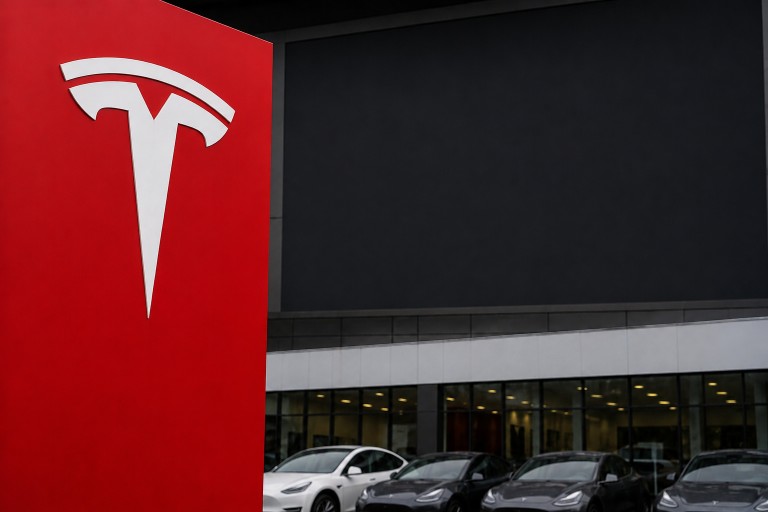
Tesla’s second-quarter earnings fell short of Wall Street expectations, leading to a dip in the company’s shares by over 3% in after-hours trading. Despite reporting higher-than-expected revenue of $28.23 billion against the anticipated $25.71 billion, the electric vehicle giant posted earnings of 31 cents per share, missing the forecasted 51 cents per share.
This financial performance has contributed to a roughly 14% decline in Tesla’s stock value so far this year. The company faces intensified competition from cost-efficient Chinese electric vehicle manufacturers and the consequences of the expiration of U.S. electric vehicle tax incentives. These factors have pressured Tesla’s market standing despite its revenue growth.
As vehicle sales remain vital, Tesla is increasingly focusing on advancements in artificial intelligence, robotics, autonomous driving, and its Robotaxi service. CEO Elon Musk emphasized the potential of the Optimus humanoid robot as a future major product, although he acknowledged significant technical and production hurdles that need to be addressed before mass production can commence.
In line with its autonomous ambitions, Tesla is expanding its Robotaxi service, now including Tampa and Orlando in its network. The service, which initially launched in Austin, also operates in Dallas, Houston, and Miami. Musk highlighted the careful progression of the Robotaxi rollout, stressing a focus on safety to prevent incidents that might attract regulatory attention. Currently, around 50 Robotaxis are operational in Austin.