
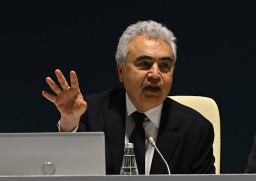
Fatih Birol, the head of the International Energy Agency, has urged developing nations not to abandon their clean energy development plans in response to the Iran crisis, warning that a return to fossil fuel dependence would only increase their long-term vulnerability to exactly the kind of supply disruptions the current crisis had demonstrated. Speaking in Canberra, the IEA chief said the right response for developing nations was to accelerate clean energy deployment as a path to energy security, not to retreat to fossil fuel dependence. He described the overall crisis as equivalent to the combined force of the 1970s twin oil shocks and the Ukraine gas emergency.
Birol acknowledged the genuine difficulty facing developing nations that needed affordable energy now and were facing acute supply constraints from the Iran crisis. He said the international community had a responsibility to help these nations bridge the immediate supply gap through emergency measures and concessional financing, while continuing to support their longer-term clean energy transitions. These two objectives were complementary, not contradictory.
The conflict began February 28 with US and Israeli strikes on Iran and has since removed 11 million barrels of oil per day and 140 billion cubic metres of gas from world markets. At least 40 Gulf energy assets have been severely damaged, and the Hormuz strait — through which approximately 20 percent of global oil flows — remains closed. The IEA deployed 400 million barrels from strategic reserves on March 11 in its largest emergency action.
Birol confirmed further releases were under consideration and said the IEA was consulting with governments across three continents. He called for demand-side policies including remote work, lower speed limits, and reduced commercial aviation. He met with Australian Prime Minister Anthony Albanese and said Australia’s development finance engagement could play a role in supporting developing nations’ energy security.
Trump’s 48-hour ultimatum to Iran to reopen the strait expired without result, and Tehran threatened retaliatory strikes on US and allied energy and water infrastructure. Birol concluded by saying that the Iran crisis should strengthen rather than weaken the case for clean energy development in all nations, including the most vulnerable. He called on developed nations to provide the emergency support and long-term clean energy financing that developing nations needed to navigate both the immediate crisis and the path to genuine energy security.